
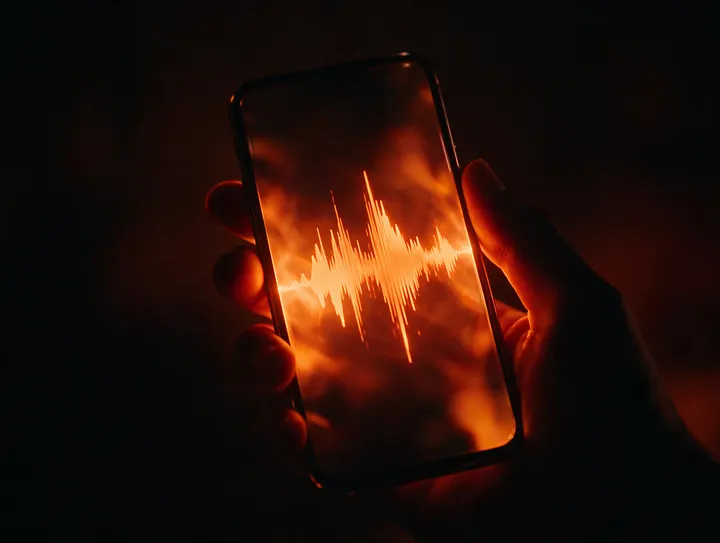
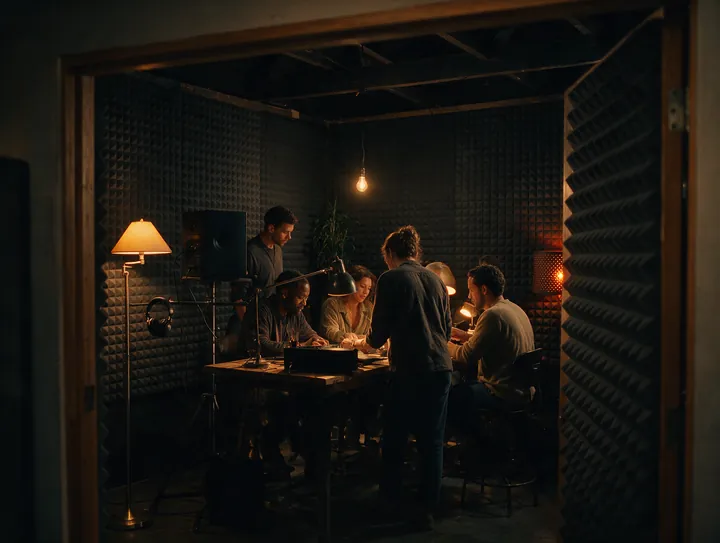
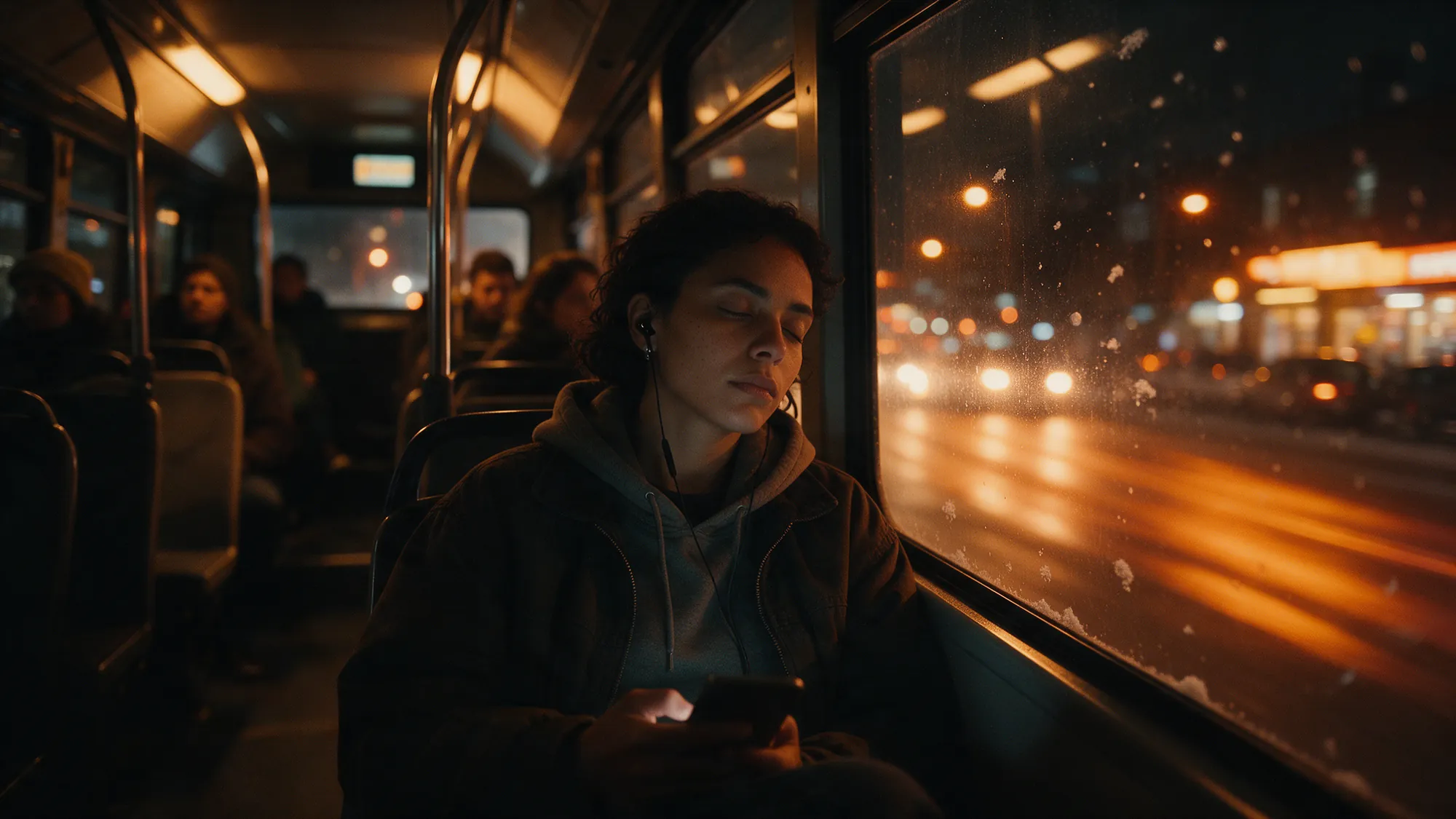
Most social apps ask for your eyes. Audio social media asks for your ears instead. The posts are short recordings of real people talking, the feed is something you play rather than scroll, and the whole experience is built to run in the background while you get on with your day.
If you have ever listened to a voice note from a friend and felt closer to them than you would have from a text, you already understand the appeal.
A social network you can listen to
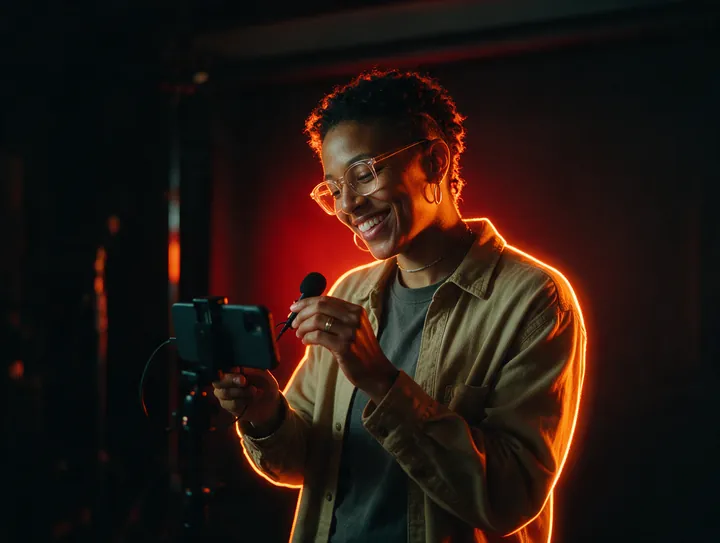
An audio-first social network is a platform where the primary post format is voice. You record a short clip, give it a title and a topic, and it lands on your timeline. People who follow you hear it. They can reply with their own voice, reshare it, or simply press play on the next one.
On Witspeak that post is called a Speak. Each Speak is up to 30 seconds long, carries a title, a language and one or more topics such as Advice, Comedy, Daily, Motivation, News, Storytelling or Technology. The topics make the feed browsable and the language tag means you only hear what you can understand.
Text is still there. It is just no longer the point. The title helps you decide what to play, the voice does the rest.
How a voice feed differs from video and text
Video feeds are designed to hold your attention. Every clip competes for the next swipe with motion, captions, music and a hook in the first second. That is why a quick check can swallow an hour.
Text feeds are faster to skim but easier to misread. Tone is lost, sarcasm lands wrong, and the format rewards the sharpest take rather than the most honest one.
A voice feed sits somewhere else entirely:
- It carries tone. A tired laugh, a pause before the point, an accent from home. You hear the person, not a filtered version of them.
- It does not need your eyes. You can listen while you walk, cook, commute or sit on a balcony with your phone face down.
- It is harder to fake. Thirty seconds of someone actually talking is more work to manufacture than a recycled meme, so the feed stays more human.
- It has a natural end. Each clip finishes. You are not fed an infinite wall of thumbnails tuned to keep you swiping.
The trade-off is honest too. Audio is slower to skim than text and less flashy than video. That is the deal, and for a lot of people it is a good one.
Why 30 seconds
Thirty seconds is long enough to say something and short enough that you will actually record it.
Shorter than that and people only have time for a greeting. Longer and the feed starts to feel like homework, with a queue of 5-minute monologues nobody finishes. Thirty seconds is roughly 70 to 80 spoken words, which is about the length of a good voice note or a strong opening thought. It forces a point, it keeps the feed moving, and it is friendly to the person listening on a short walk.
It also keeps the barrier low for creators. You do not need a script, lighting, a ring light or an edit. You need something to say and the willingness to press record. For many people that is a far easier way to show up than filming their face.
Play All turns the feed into a stream
This is the part that changes how you use the app. On a visual feed, every post is a decision. Tap, watch, swipe, tap, watch, swipe. The app wins when you keep deciding.
Play All removes the deciding. One tap and every Speak in your feed plays back to back, newest first, like a radio station made of the people you follow. Lock your phone, put it in your pocket and listen. A friend's update about her first week in a new job, a short motivation clip, a comedian trying a new bit, a neighbour's take on the weather, a stranger explaining a bug in their code. When it ends, it ends.
Smart Play All goes one step further and learns what you tend to finish, so the stream leans towards the topics and voices you actually enjoy. The goal is not to keep you on the app longer. It is to give you a better 20 minutes, then let you go.
Where live audio and channels fit
Short feeds are the heartbeat, but audio social media also covers longer and more live formats:
- Channels let creators build a home for a subject, a community or a show, with listeners who subscribe through Listen.
- goLive is live audio streaming on your own channel, with live chat beside it. You can also play pre-recorded audio to a live room.
- Voice Chat is private, one-to-one voice messaging. On Witspeak those messages auto-delete after one play, which makes them feel more like a conversation than a record.
- Voice bio is a 60-second spoken profile, so people hear who you are before they follow you.
Podcasts round it out. A podcast is the long-form cousin of the voice feed, and with free hosting on Witspeak Podcasts the two live side by side in one app.
Who audio social media is for
It suits people who are tired of performing for a camera. People who commute, run, drive or work with their hands. People who want to keep up with friends in other time zones without typing. Creators who are better at talking than editing. Anyone who has noticed that their screen time number keeps going up and their mood keeps going down.
It is not a replacement for every other network. It is a quieter room next door.
Try it
If you want a feed you can listen to while you live your life, Witspeak is free on iOS and Android. Record your first Speak, press Play All and see how different social media feels when it is in your ears instead of in your face. Download the app at witspeak.com/download.