

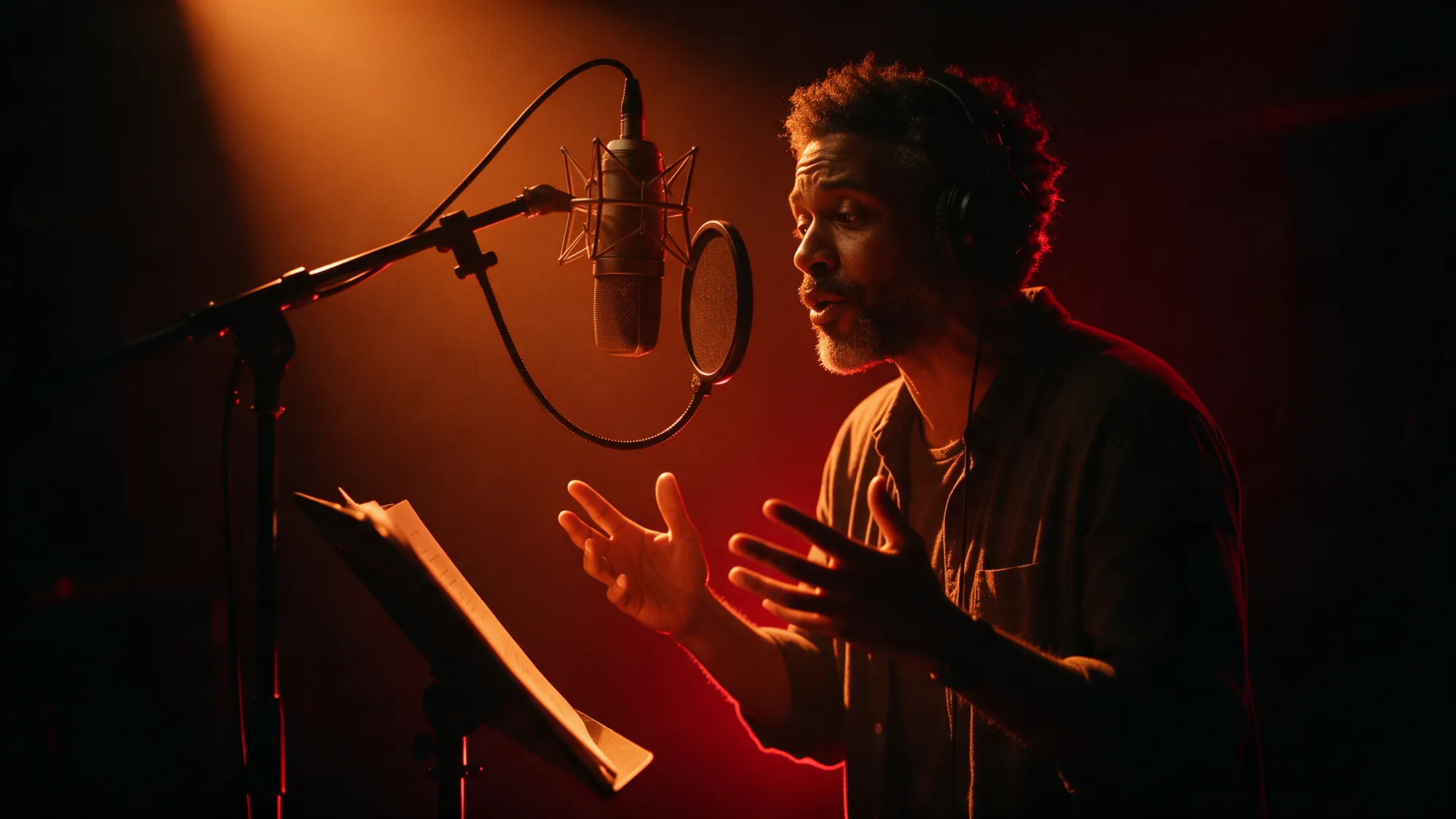
Audio drama is the oldest form of radio and one of the fastest growing corners of podcasting. Fiction shows now chart next to interview shows, and the barrier to making one has never been lower. You do not need a studio or a cast of professionals. You need a script that works for the ear, a few people who can act, and some patience with sound. Here is a beginner's path.
Write for the ear, not the page
The listener cannot see anything. Everything they know arrives through dialogue, sound and silence. That changes how you write.
- Let sound establish the scene. Do not have a character say "we are in a hospital". Let a trolley rattle past, a monitor beep and a voice over a tannoy do it.
- Name characters early and often. Listeners lose track of who is speaking far faster than readers do. Use names in dialogue more than feels natural.
- Keep the cast small per scene. Two or three voices in a scene is easy to follow. Five is chaos unless they sound very different.
- Read every line aloud before it goes in the script. If it is hard to say, it will be hard to hear.
- Use silence. A pause after bad news does more than a line of dialogue.
Format the script with sound cues in a different style from dialogue, so actors and your sound designer can scan it fast.
Cast for voices that contrast
Your cast does not need stage credits. It needs clarity and range. When you cast:
- Choose voices that sound different from each other in pitch, pace and texture. If two leads sound similar, the listener will mix them up.
- Hold auditions remotely. A 2-minute scene recorded on a phone tells you most of what you need.
- Look in local theatre groups, drama courses and voice-over communities. Many will work for a credit and a modest fee on a first season.
- Ask each actor for a short spoken sample, something like a 60-second Voice bio, so you can compare them side by side.
Direct for intention, not line readings. Tell an actor what the character wants in the scene and let them find the delivery.
Sound design and foley
Sound design is where audio drama lives. It is also where beginners either overdo it or skip it. Aim for a few well-chosen sounds per scene rather than a wall of effects.
Three layers:
- Ambience. The room tone or environment, running under the whole scene. A street, a kitchen, rain on a window.
- Spot effects. Specific actions: a door, footsteps, a glass set down.
- Foley, which is spot effects you record yourself. A tray of gravel for footsteps, a leather wallet for a punch, celery for breaking bones. Recording your own foley is cheap, fun and sounds more real than library effects because it matches your mic and your room.
Keep effects slightly quieter than you think. Dialogue always wins.
Music licensing basics
Music gets creators into trouble more than anything else. The short version:
- You cannot use a commercial song without a licence, even for 5 seconds, even with credit.
- Royalty-free libraries such as Epidemic Sound and Artlist sell a subscription that covers podcast use. Read the licence to check podcasts are included.
- Creative Commons music is usable if the licence allows commercial use and you follow the attribution rules. Avoid anything marked NC or ND.
- Commissioning a composer is more affordable than people expect for a short theme, and you own the result.
Keep a file with the licence for every piece of music you use, so you can prove it later.
Episode length and pacing
New fiction listeners commit in small steps. Shorter episodes get finished, and finished episodes get recommended.
- A good first season runs 15 to 25 minutes per episode.
- Open on action or a question within the first 30 seconds. Save the theme music for after the cold open.
- End every episode with an unresolved beat.
Anthology shows can run longer because each episode stands alone, but keep season one tight.
Serialise it
A serial gives listeners a reason to come back and gives you a structure to write toward.
- Plan the season arc before you write episode 1. Know the ending.
- Release on a fixed day. Weekly is ideal. Fortnightly works if you are honest about it.
- Record at least 3 episodes before you publish the first, so an illness or a lost file does not break the schedule.
- Number the episodes clearly so new listeners know where to start.
Release 30-second teasers as voice feeds
Fiction is hard to market with a text post. It is easy to market with sound. Cut a 30-second moment from each episode, a cliffhanger line, a piece of great sound design, a laugh, and post it as a Speak on Witspeak under the Storytelling or Entertainment topic. Listeners hear the show itself rather than a description of it, and a reSpeak carries it to new timelines.
If you host on Witspeak Podcasts, AI Highlight Clips will pick the strongest 30 seconds from each episode for you. You can also use goLive on your Channel to read a scene live, take questions in the chat and let listeners gift INC coins if they want to support season two.
Start small, finish something
The most important advice for a first audio drama is to make it short and finish it. A 3-episode pilot season teaches you more than a 12-episode plan you never complete. Write it, cast it, record it, and put it out.
When it is ready, Witspeak Podcasts will host it free and send it to every major app. Create your show and give your first episode a release date.