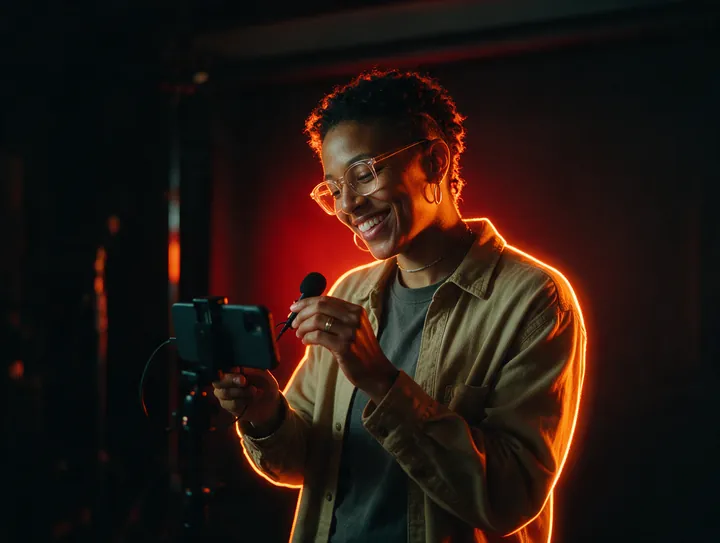
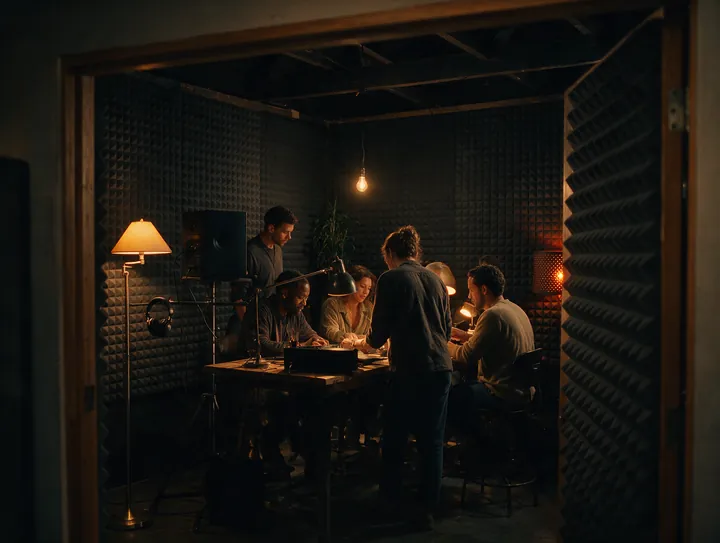

You do not need a studio to sound good. You need a microphone that suits your room, a quiet corner and a little discipline. This guide walks through the budget microphones that voice creators actually use in 2026, what the jargon means and where your money makes the biggest difference.
Start with the room, not the gear
Here is the uncomfortable truth. A 50 dollar microphone in a soft, quiet room beats a 500 dollar microphone in an echoey kitchen. Microphones capture everything, including the fridge hum, the reflections off bare walls and the neighbour's lawnmower.
Before you buy anything, try this:
- Record in the smallest, softest room you have. Wardrobes full of clothes are famous for a reason.
- Put a duvet or thick blanket behind you and another on the desk.
- Turn off fans, air conditioning and anything with a motor.
- Speak 10 to 15 centimetres from the capsule, slightly off-axis, so plosives (the "p" and "b" pops) miss the diaphragm.
Do that, and almost every microphone below will sound professional.
Dynamic vs condenser, in plain words
Dynamic microphones are less sensitive. They pick up what is close and ignore much of what is far away. That makes them forgiving in untreated rooms and ideal for voice feeds, podcasts and live channels recorded at home.
Condenser microphones are more sensitive and more detailed. They sound beautiful in a treated space and unforgiving in a noisy one. If you record in a bedroom with hard walls, a condenser will faithfully capture every reflection.
For most creators reading this, a dynamic microphone is the safer buy.
USB vs XLR
USB microphones plug straight into a laptop or phone and need nothing else. They are the simplest route and the best value under 100 dollars.
XLR microphones need an audio interface, a small box that converts the signal, which adds roughly 60 to 150 dollars. The upside is upgradeability. You can change the microphone later and keep the interface.
Several of the picks below do both, which is the sweet spot for a first purchase.
The picks
Samson Q2U (roughly 60 to 80 dollars)
A dynamic microphone with both USB and XLR outputs, a headphone jack for zero-latency monitoring and a sound that punches far above its price. It is the default recommendation for anyone starting a podcast or recording voice feeds at home. Buy a foam windscreen and a cheap desk arm with it.
Audio-Technica ATR2100x-USB (roughly 80 to 100 dollars)
The closest rival to the Q2U and the same idea: dynamic, USB plus XLR, built-in headphone output. Slightly smoother top end. Pick whichever is cheaper where you live.
Fifine dynamic and condenser models (roughly 30 to 80 dollars)
Fifine has become the budget brand of choice for streamers. Their dynamic USB models are surprisingly solid, with onboard gain and a mute button. Their condenser models are cheaper still but need a quiet room. Treat them as a first step rather than a forever purchase.
Rode NT-USB Mini (roughly 100 dollars)
A compact USB condenser with a built-in pop filter, a magnetic desk stand and a clean, flattering sound. Rode's companion software adds noise reduction and compression. Lovely in a soft room, less lovely in a hard one.
Shure MV7+ (roughly 250 to 280 dollars)
The stretch pick. A dynamic microphone that does USB-C and XLR, with onboard processing, automatic level control and a touch panel. It carries the Shure broadcast sound without the interface and preamp costs of its bigger siblings. If you know audio is your long-term thing, this is the last microphone many creators buy.
Lavaliers and phone microphones
If you record Speak voice feeds while walking, driving or cooking, a desk microphone is no use. Three cheaper options work well:
- Wired lavalier microphones (roughly 15 to 40 dollars) from Rode, Boya and similar brands clip to your collar and plug into a phone with the right adapter. Close to the mouth, consistent distance, decent sound.
- Wireless lavalier kits (roughly 60 to 150 dollars) such as the Rode Wireless Go family or the DJI Mic Mini give you freedom to move and record straight to the phone.
- Your phone's own microphone is better than you think when you hold it 10 centimetres from your mouth in a quiet room. Plenty of great voice feeds are recorded exactly this way.
What to spend on instead of a better microphone
- A pop filter or foam windscreen. 5 to 15 dollars, and it fixes the most common problem.
- A boom arm or desk stand. Keeps the microphone close and stops desk knocks reaching the capsule.
- Closed-back headphones. Hearing yourself as you record catches plosives and clipping before they reach the edit.
- Soft things. Rugs, curtains, cushions, a moving blanket. Treatment is cheap when you do it yourself.
Let software do the last 20 percent
Even a good budget recording benefits from cleanup. AI Voice Studio in the Witspeak app and podcast studio removes background noise, auto-levels the recording and masters it to -16 LUFS in one tap, so a Q2U in a bedroom lands at the same loudness as a studio show. It will not fix a bad room, but it will rescue a slightly noisy one.
A simple buying guide
- Under 50 dollars: a wired lavalier, or a Fifine dynamic USB microphone.
- 50 to 100 dollars: Samson Q2U or ATR2100x. Buy one of these and stop thinking about gear.
- 100 to 150 dollars: Rode NT-USB Mini if your room is soft, or a wireless lavalier if you record on the move.
- Over 200 dollars: Shure MV7+ once you have proven you will stick with it.
Ready to put a microphone to work? Download the Witspeak app, record your first 30-second voice feed and let AI Voice Studio handle the polish.