




The group chat problem
Most group chats start well. A trip, a project, a family thread. Then they grow. Forty unread messages before breakfast. Half of them are reactions to a message you have not read yet. You scroll up to find the start, lose your place, and give up.
The exhaustion is not about the people. It is about the format. Typed chat flattens everyone into the same grey bubbles, asks you to read in order, and punishes you for stepping away. A conversation that would take 3 minutes out loud becomes 40 messages, 3 misunderstandings and one person quietly muting the thread.
There is a better pattern, and it is older than texting. People talking in a room.
What text loses
Text is efficient for facts. It is terrible for feeling.
- Tone. "Fine." in a chat can mean fine, or the opposite. Spoken, you know in half a second.
- Nuance. A pause, a laugh, a softer voice at the end of a sentence. None of it survives typing.
- Effort. Typing a thoughtful reply on a phone takes minutes. Saying it takes 20 seconds.
- Presence. A chat is a log. A room is a place.
Voice carries all of that for free. That is why a 2-minute call can resolve what a 2-day chat thread could not.
Rooms you drop into, not threads you catch up on
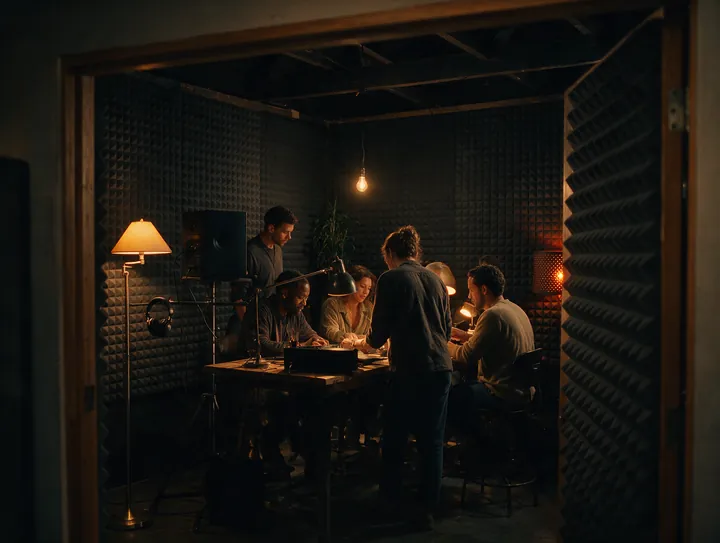
A community voice room works differently from a chat. On Witspeak, any channel owner can tap goLive and open a live audio room. People join when they can, listen for as long as they like, and leave without ceremony. Nobody has to read back. If you missed it, you missed it, the same way you would miss a conversation at a kitchen table.
That changes the social contract:
- There is no backlog to feel guilty about.
- Nobody is waiting on your reply.
- The room has a start and an end, so it does not follow you around all day.
A study group can open a room every Tuesday at 8. A neighbourhood community can open one when something happens. The room is the place; the channel is the door.
Live chat runs alongside the audio for links, questions and quick reactions, so the typed layer still exists where it is useful. It just stops being the main event.
Messages that do not pile up
Not every conversation needs a room. For the one-to-one layer, Witspeak has Voice Chat: private voice messages that play once and then delete themselves.
That single rule does a surprising amount of work. A voice note that disappears after one play is listened to properly, because there is no second chance. It is not archived, screenshotted or quoted back at you in 6 months. It feels closer to talking than to filing.
It also keeps the inbox honest. Nothing accumulates. You listen, you reply or you do not, and the thread stays light.
Etiquette for voice rooms
Rooms are better than chats, but they still need a few shared habits. These are the ones that hold up.
- Say who you are when you join if the room is small. A name and one line is enough.
- Keep turns short. Think 30 to 60 seconds, then hand over. Long monologues are the voice equivalent of a wall of text.
- Mute when you are not talking. Dishes, traffic and keyboards are the fastest way to empty a room.
- Use the chat for links and spellings, not for side conversations that compete with the audio.
- Hosts set the tone. Welcome people by name, summarise where the conversation is for newcomers, and close the room cleanly rather than letting it trail off.
- Respect the one-play rule in Voice Chat. If someone sends a message that disappears, they chose that on purpose.
Witspeak's AI Guardian moderates live audio and chat in real time, which takes the worst of the policing off the host. The habits above handle the rest.
Where this works best
Study groups. Reading the same chapter alone is lonely. Opening a 30-minute room to argue about it is not. Questions get answered in the moment, and the typed chat becomes a shared list of references instead of a mess of half-replies.
Families across time zones. A family group chat is often 3 people awake and 7 asleep. Instead, a parent in Karachi records a 30-second Speak about their day, a daughter in Toronto plays it on the way to work, and on Sunday everyone drops into a live room for an hour. Nobody has to type "sorry, just seeing this".
Fan communities. Match day, episode night, album release. These moments are made for a room. Reactions land live, the host can bring a guest up to the mic, and when it ends, the host can turn the best moments into clips for the voice feed so people who missed it still get the feeling.
Small teams and clubs. A weekly stand-up as a 15-minute room beats a Monday chat that runs until Wednesday.
Making the switch
You do not need to delete the group chat. Keep it for logistics. Move the conversation itself, the part with opinions and jokes and comfort in it, into rooms and voice messages. Most groups find the chat goes quiet on its own.
Start small: one recurring room, one time, one host. Post a Speak the day before as a reminder. Then see who shows up.
If your community is tired of scrolling, give them somewhere to talk instead. Download Witspeak and open your first room this week.