



Your voice is an instrument, and like any instrument it sounds better warmed up and worse when it is tired. Most audio creators never think about this until the day they lose their voice halfway through a live stream. A few minutes of care before you record, and a few habits during, will make you sound clearer, last longer and protect the one thing you cannot replace.
Breathe from low down
Good vocal sound starts with breath. If you breathe into your shoulders and chest, you run out of air mid-sentence and your voice tightens.
- Place a hand on your stomach. Breathe in through your nose for 4 counts. The hand should move out, not your shoulders up.
- Breathe out on a long, steady sss for as long as you can. Aim to extend it a little each day.
- Do 5 rounds. This settles nerves as well as the voice, which is why it is worth doing before a live session.
When you speak, let each sentence ride on a breath. Pause at the end of a thought rather than gasping in the middle of one.
Lip trills and gentle humming
Lip trills are the single most effective warm-up, and they look ridiculous, which is fine because nobody can see you.
- Relax your lips and blow through them so they flutter, like a horse. Add a note. Slide the note up and down your range.
- Do this for 60 seconds. It warms the vocal folds with very little strain.
- Follow with a hum on a comfortable note, feeling the buzz in your lips and nose. Slide up and down gently.
Never push to the top of your range cold. The warm-up is about gentle movement, not performance.
Tongue twisters for clarity
Mumbled consonants are the most common reason listeners rewind. Spend a minute waking up the tongue and lips.
- "Red leather, yellow leather", slowly, then faster.
- "Unique New York", five times.
- "The tip of the tongue, the teeth, the lips."
Over-articulate during practice. When you then speak normally, your diction will be crisper without sounding stiff.
Hydrate before, not during
Water lubricates the vocal folds, but it takes time to get there. A glass just before you record makes the throat feel better but does not reach the folds for an hour or more.
- Drink water steadily through the day you plan to record.
- Room temperature is kinder than ice cold.
- Avoid dairy and heavy caffeine in the hour before. Both thicken or dry the throat.
- If your voice feels rough, steam helps more than anything you can drink. A hot shower before a session works.
Keep water beside the mic for comfort, and sip between takes rather than mid-sentence.
Mic distance and posture
The mic is a lens. Where you put your voice in front of it matters as much as the voice itself.
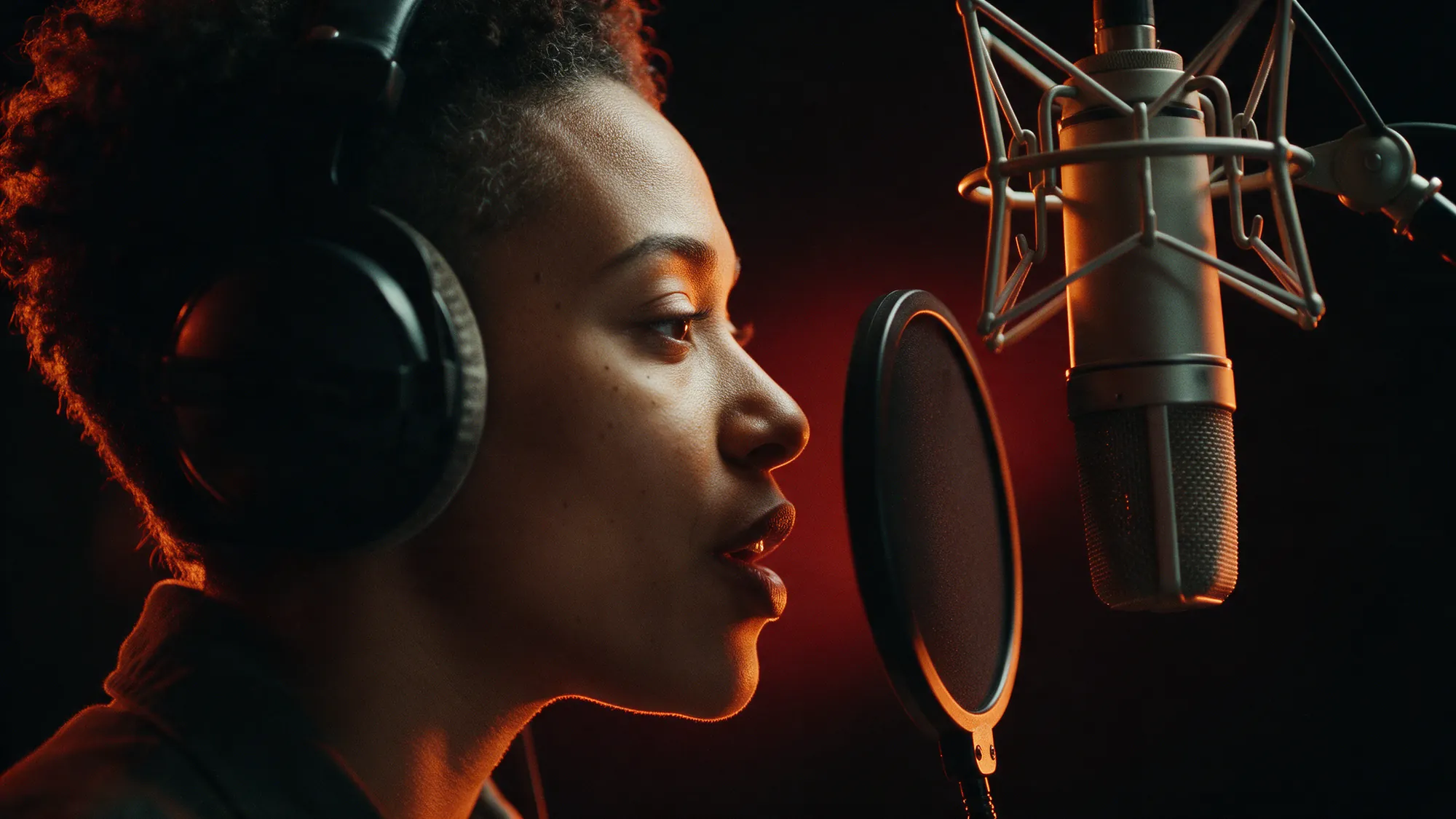
- For most dynamic podcast mics, aim for a fist's width, roughly 10 cm, from mouth to grille. Closer gives a warmer, bassier tone. Further sounds thinner and picks up more room.
- Speak slightly across the mic rather than straight into it to soften plosives on p and b sounds. A pop filter helps.
- Keep the distance consistent. Leaning in for emphasis and back to laugh produces volume jumps that are hard to fix.
Posture changes the sound directly. Sit upright or stand, with your ribcage open and your chin level. Slumping compresses the lungs and the voice drops in energy. If you sit, keep both feet on the floor.
Pacing
Nervous speakers rush. Rushing makes consonants collide and gives the listener no time to absorb a point.
- Slow down about 10 percent more than feels natural. It will sound normal on playback.
- Pause at full stops. Pauses sound confident, not awkward.
- Vary the pace. Slow down for the important sentence, pick up for the aside.
- Put emphasis on the word that carries the meaning, not the first word of every sentence.
Record a 30-second Speak on Witspeak and listen back. Thirty seconds is long enough to hear your habits and short enough to try again straight away.
Protect your voice on live streams
Live audio is tougher on the voice than recording, because there are no retakes and the adrenaline makes you push harder. If you host on goLive, a few rules will keep you going:
- Warm up before you go live, not during the first 5 minutes.
- Keep the live chat on a screen you can see without craning your neck.
- Do not shout over music or crowd noise in the room. Turn the room down instead.
- Take a water break every 20 minutes. Tell the listeners. They will not mind.
- If your throat starts to hurt, stop. Pain is damage. Pre-recorded audio can run on your Channel while you rest.
- After a long stream, go quiet for an hour. No talking and no whispering, which strains the folds more than speaking does.
Rest is a tool. A voice that is rested on Monday sounds better on every stream that week.
A 5-minute routine
Do this before every recording or stream:
- Minute 1. Low breathing. 5 rounds of in for 4, out on a long sss.
- Minute 2. Lip trills, sliding gently up and down.
- Minute 3. Humming, then open to an ah on a comfortable note.
- Minute 4. Tongue twisters, slow then fast.
- Minute 5. Read your first paragraph aloud at 10 percent slower than natural, at your mic distance, in your recording posture.
Five minutes, every time. Your listeners will hear the difference before you do.
Put it to work
Record a quick Speak to test the routine, or post a 60-second Voice bio so people hear the warmed-up version of you first. Download Witspeak and give your voice the 5 minutes it deserves.